Can Direct-to-Surface Printing on Natural Stone: The 2026 Industrial Guide
a piece of 200-million-year-old metamorphic rock truly become a high-definition digital display without losing its soul? For architects and interior designers, the traditional trade-off between the raw beauty of marble and the precision of digital printing on natural stone is finally over. You’ve likely faced the frustration of ink peeling from porous slate or colors vanishing against the deep shadows of Nero Marquina granite. It’s a common struggle when trying to push the boundaries of luxury surfaces without compromising material integrity.
This industrial guide from Sun Studio Dubai ensures you master the sophisticated nuances of direct-to-surface applications for your 2026 project pipeline. We’ll show you how to leverage advanced UV-LED technology to achieve permanent, architectural-grade finishes that respect the stone’s tactile essence. From understanding substrate porosity to navigating evolving industry standards, you’ll gain the expertise needed to integrate complex branding and bespoke patterns into high-volume commercial builds nationwide. We’ll examine the technical shift from traditional engraving to full-color digital precision, providing a roadmap for seamless project execution.
Key Takeaways
- Understand how industrial UV technology transforms raw minerals into high-definition canvases, providing a level of detail that traditional sandblasting can’t match.
- Master the science of substrate preparation to ensure long-lasting ink adhesion on challenging surfaces like polished marble and porous slate.
- Discover how to utilize white ink and multi-layered varnish to create raised, 3D textures that elevate the tactile experience of architectural stone.
- Explore high-value commercial applications for printing on natural stone, ranging from custom hotel receptions to luxury retail cladding across the Emirates.
- Learn how to leverage industrial-grade machinery and regional expertise to execute complex, high-volume stone customization projects with precision.
Table of Contents
- The Evolution of Stone Customization: Beyond Traditional Engraving
- Substrate Science: Mastering Adhesion on Marble, Granite, and Slate
- Tactile Branding: Raised Textures and White Ink Effects
- Architectural and Commercial Applications Across the Emirates
- Sun Studio Dubai’s Industrial Edge: Production and Machinery Solutions
The Evolution of Stone Customization: Beyond Traditional Engraving
Historically, stone served as the primary substrate for The Evolution of Stone Customization, where limestone blocks acted as the original medium for mass-produced imagery. Today, we’ve inverted that relationship. Modern direct-to-surface UV technology represents a digital-to-physical transformation, treating marble, granite, and slate not as heavy obstacles, but as premium canvases for high-definition artistry. This shift allows us to move beyond the limitations of traditional methods, offering a level of precision that was previously unimaginable in the architectural sector.
Traditional stone engraving and sandblasting are subtractive processes. They rely on material removal, which often compromises the structural integrity of the slab and restricts designers to monochromatic or single-depth patterns. In contrast, printing on natural stone using industrial UV-LED systems is an additive process. It layers specialized, high-opacity inks directly onto the surface, allowing for photographic fidelity and millions of colors without chipping the stone. This capability has redefined the production of bespoke architectural elements in Dubai’s luxury hotel lobbies and high-end corporate headquarters.
The technical success of this medium depends on the chemistry of UV curing. Natural stone varies wildly in its physical properties, ranging from non-porous polished marble to highly absorbent, semi-porous slate. Traditional solvent inks often fail because they either sit on the surface and peel or soak into the pores and blur. UV-LED technology cures the ink instantly with high-intensity light, creating a durable, cross-linked bond. This ensures the design remains stable even when exposed to the high humidity and temperature fluctuations common across the UAE.
Why Real Stone Outperforms Imitation in Luxury Sectors
While imitation materials like printed quartz or porcelain are common, they lack the psychological prestige and haptic weight of genuine minerals. High-end clients in the Emirates value the unique geological story of every slab. Industrial UV printing doesn’t mask these natural features; it utilizes the organic veining as a design element. Unlike vinyl wraps that may bubble or fade under the Gulf sun, direct-to-surface prints become a permanent part of the material, maintaining the stone’s market value and aesthetic longevity.
The Role of UV Digital Technology in 2026
By 2026, production speed and design complexity have become the primary benchmarks for industrial-scale cladding. We can now execute intricate, multi-color gradients and fine-line details that were physically impossible with traditional carving. This technology also supports sustainability goals. By using printing on natural stone to achieve decorative effects, we significantly reduce the stone dust and waste generated by deep mechanical carving, ensuring a cleaner, more efficient production cycle for large-scale commercial builds.
Substrate Science: Mastering Adhesion on Marble, Granite, and Slate
Success in printing on natural stone isn’t just about the quality of the printer; it’s about the chemistry between the ink and the mineral structure. Each slab presents a unique molecular profile. Porosity dictates how ink behaves upon contact. If a stone is too porous, like certain limestones, the ink can “sink,” resulting in washed-out colors. If it’s too dense, like polished marble, the ink may struggle to find a mechanical grip. Achieving a zero-peel finish requires a deep understanding of Mastering Adhesion on Marble, Granite, and Slate to ensure the longevity of the installation.
Environmental conditions in the UAE play a significant role in production. High ambient temperatures and humidity levels can affect the surface energy of the stone before it even reaches the printer bed. We utilize climate-controlled environments and specific surface preparation protocols to stabilize these variables. For high-gloss stones like polished marble, specialized primers are mandatory. These primers act as a molecular bridge, bonding the UV-cured ink to the non-absorbent, glass-like surface of the stone. This meticulous preparation is the difference between a decorative piece that lasts a season and an architectural finish that survives for decades.
Porous vs. Non-Porous Stone Printing
Slate and limestone require careful ink management to prevent absorption from dulling the visual impact. We often use a high-density white base layer to seal the pores before applying the CMYK design. Conversely, polished granite’s challenge is its high surface tension. Surface tension is the cohesive force at the surface of a liquid that determines how well an ink droplet spreads or “wets” the stone substrate. Without proper pre-treatment, ink on granite can bead up, leading to uneven textures and poor durability.
Ink Chemistry and Durability Standards
We prioritize industrial-grade Marabu inks for their exceptional lightfastness and scratch resistance. This is critical for architectural stone panels exposed to intense UV radiation in the Emirates, where sunlight can degrade inferior pigments in months. To guarantee performance in high-traffic areas like hotel lobbies or retail flooring, we conduct rigorous cross-hatch adhesion tests. This involves scoring the printed surface in a grid and applying pressure-sensitive tape to ensure no delamination occurs. These standards ensure our prints withstand aggressive industrial cleaning agents and the daily abrasion of high-footfall commercial spaces. If you’re planning a large-scale project, exploring the technical capabilities of UV-LED systems can help you specify the right finish for your specific substrate.
Tactile Branding: Raised Textures and White Ink Effects
The true mastery of printing on natural stone lies in its ability to transcend two-dimensional imagery. While traditional methods focus on flat color, our industrial UV processes allow us to manipulate the physical profile of the substrate. By layering ink with micron-level precision, we transform a cold slab of marble into a sensory experience. This tactile approach, often referred to as haptic branding, allows architects to create surfaces that invite touch and engage the viewer beyond simple visual observation. It’s a sophisticated interplay of light, shadow, and mineral texture that defines the next generation of Emirati interior design.
Light manipulation is a critical component of this execution. By utilizing clear gloss varnishes selectively, we can highlight specific geological features of a stone slab. For instance, applying a high-gloss finish only to the natural veins of a matte-finished Carrara marble creates a “wet” look that mimics the appearance of stone under water. This contrast between the natural stone texture and the digitally applied gloss adds a layer of luxury that feels both organic and intentional. It’s a proactive way to enhance the material’s inherent beauty rather than simply covering it with a design.
The Power of White Ink on Dark Substrates
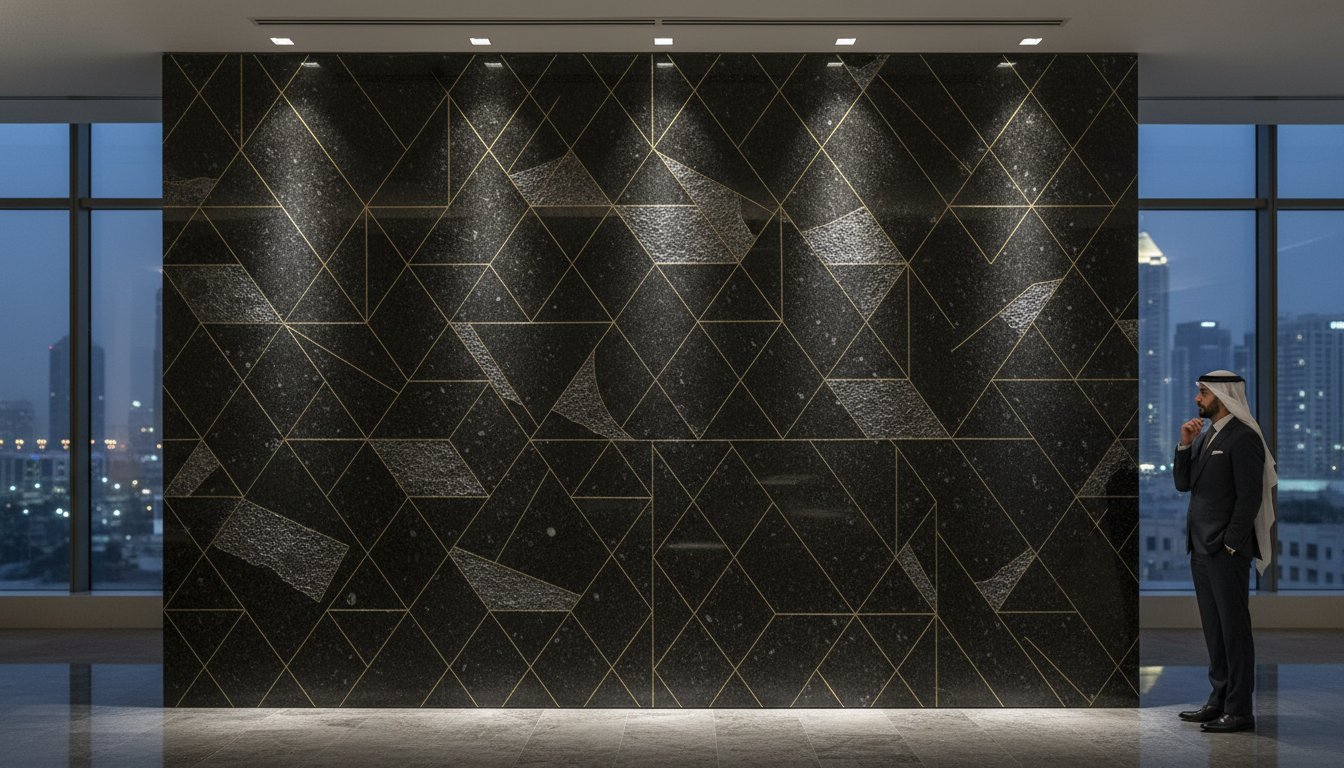
Dark stones like Nero Marquina or black granite present a significant challenge: ink transparency. Without a specialized foundation, CMYK pigments simply disappear into the dark mineral base. We solve this by deploying a high-opacity white ink as a structural under-layer. This white base acts as a digital primer, ensuring that corporate colors and intricate patterns maintain 100% color fidelity regardless of the stone’s darkness. For corporate logos, we often use selective white layering. This technique allows us to print vibrant, crisp branding on dark slate while leaving the surrounding stone in its raw, natural state, creating a striking visual contrast that commands attention.
Raised UV Textures for High-End Interiors
In the luxury hospitality sector, the demand for “embossed” effects is growing. We achieve this through a technical process of multi-pass printing, where the UV-LED lamps cure successive layers of ink almost instantly. This builds physical height on the stone surface. We can simulate the feel of traditional hand-carving or create entirely new textures, such as geometric patterns that rise 2mm off a marble tabletop. This capability is particularly effective for bespoke stone signage. We’ve seen a shift toward incorporating Braille or tactile navigation patterns directly onto stone wall panels in Dubai’s commercial hubs, ensuring that accessibility doesn’t come at the expense of premium aesthetic standards.
Architectural and Commercial Applications Across the Emirates
In the UAE, architectural ambition often demands materials that are as resilient as they are beautiful. While small-scale desktop gifts have their place, the true potential of printing on natural stone is realized in large-format commercial environments. We see a growing trend where standard slabs of marble and granite are transformed into bespoke communicative surfaces. This isn’t just about aesthetics; it’s about integrating brand identity into the very fabric of the building’s structure. From the luxury retail corridors of Dubai Mall to the prestigious government headquarters in Abu Dhabi, digital stone customization is setting a new standard for permanent interior and exterior finishes.
Hospitality and Retail Excellence
First impressions in the hospitality sector are often defined by the reception desk. By printing corporate logos or intricate patterns directly onto marble check-in counters, hotels create a seamless blend of luxury and branding. This avoids the need for secondary signage that might clutter a minimalist design. In high-end suites, we also see personalized guest experiences through stone-based amenities, such as custom-printed marble trays or decorative wall accents. For retail environments, the challenge is durability. We utilize specific curing processes to ensure that printed floor tiles can withstand the high-footfall abrasion typical of premium shopping centers without losing color vividness or detail.
Beyond horizontal surfaces, customized stone cladding is revolutionizing storefront design. Designers can now specify intricate patterns that flow across multiple stone panels, creating a cohesive visual narrative that covers entire walls. This level of precision in printing on natural stone allows a brand to own its space in a way that standard stone simply cannot achieve. If you’re ready to elevate your commercial space with these advanced techniques, you can consult with our industrial printing experts to discuss your project requirements.
Corporate and Public Sector Signage
Public sector projects and corporate headquarters require a level of prestige that only natural stone can provide. We produce large-format stone plaques and wayfinding markers that serve as permanent landmarks. These installations must survive the UAE’s extreme outdoor climate. To ensure longevity, we incorporate high-grade UV inhibitors and specialized sealants that protect the print from solar degradation and wind-borne sand abrasion. This technical rigor ensures that a corporate identity remains crisp and professional for decades, regardless of the environmental stress. By transforming standard stone tiles into unique artistic feature walls, businesses can create inspiring workspaces that reflect their values through high-definition, tactile imagery.
Sun Studio Dubai’s Industrial Edge: Production and Machinery Solutions
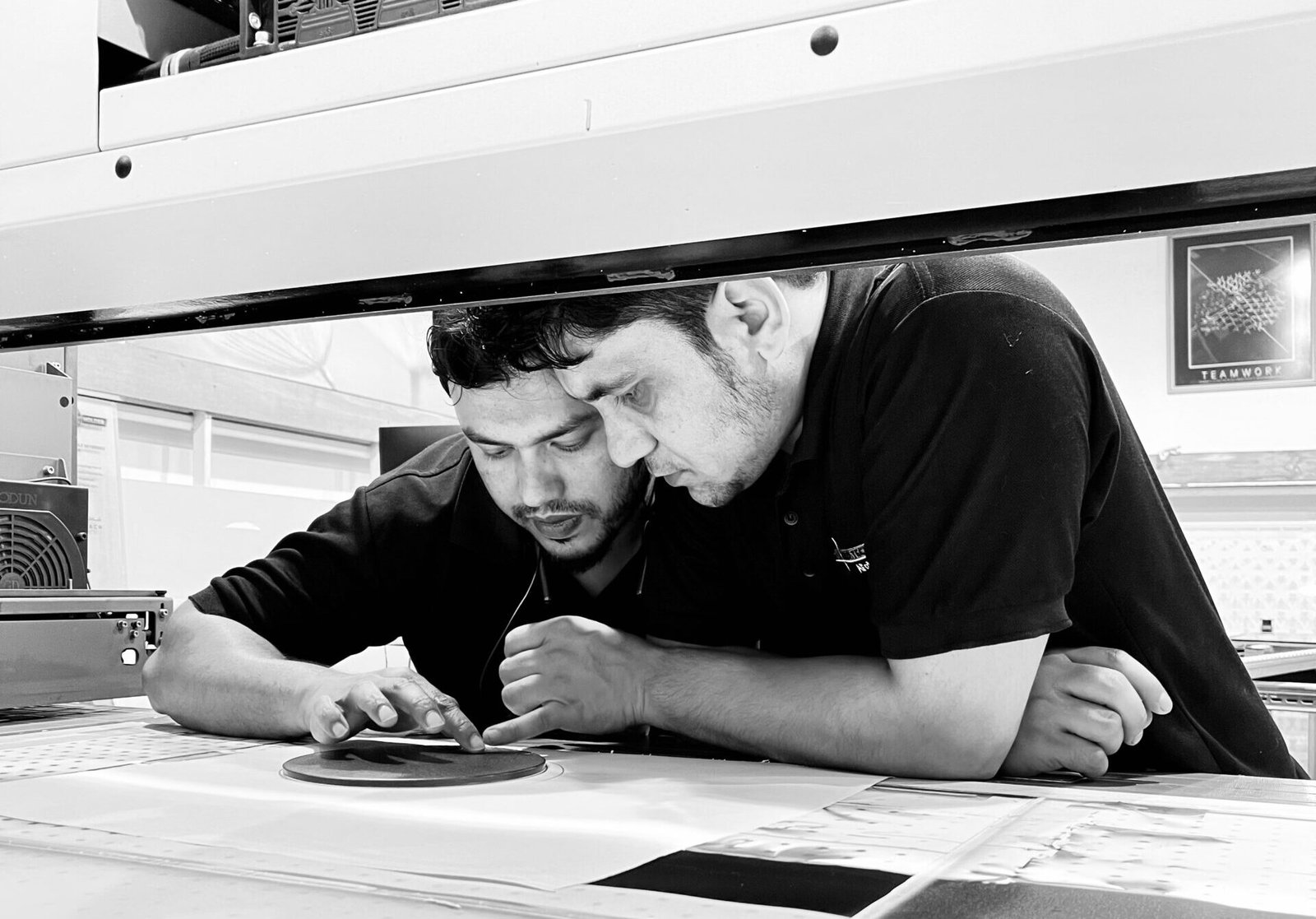
Transitioning from conceptual design to physical execution requires more than just high-quality stone; it demands a deep alignment with the right technology. At Sun Studio Dubai, we operate as a live technology showroom under the PRO TECHnology umbrella, providing a unique environment where the theoretical possibilities of printing on natural stone meet industrial reality. This isn’t a static display. It’s a functional production hub where architects, interior designers, and industrial partners can witness the precision of UV-LED systems firsthand. By bridging the gap between hardware distribution and specialized production, we ensure that every technical nuance is addressed before a single drop of ink touches the substrate.
Our competitive advantage is rooted in our partnership with Direct Color Systems (DCS). These machines are engineered for the specific challenges of heavy, irregular substrates like marble and granite. Unlike standard flatbed printers, DCS technology offers superior Z-axis clearance and specialized ink delivery systems that maintain focus even on stones with slight surface variances. We complement this hardware with Marabu inks, ensuring total project confidence by inviting clients to provide their own stone samples for rigorous testing. This collaborative approach allows us to fine-tune the ink-to-stone bond, ensuring that the final output meets the strict durability standards required for UAE commercial builds.
The Technology Showroom Experience
Investing in industrial-grade machinery is a significant capital commitment. Seeing a live production environment at Sun Studio Dubai is critical because it allows you to evaluate machine performance on diverse stone densities and weights. You can observe how the vacuum beds handle large-format slabs and how the UV-LED lamps cure the ink instantly without generating excessive heat that might cause stone thermal shock. Beyond the hardware, visitors gain access to our technical support team, who provide deep expertise in ink chemistry and surface pre-treatment protocols specific to the regional climate.
Outsourced Production vs. In-House Investment
Choosing between bespoke project outsourcing and a full machinery purchase depends on your long-term scalability. For designers focused on a single luxury hotel reception or a limited series of bespoke furniture, our specialized production services provide a turnkey solution with zero overhead. However, for stone suppliers and large-scale architectural firms looking to internalize their customization, an in-house investment offers unmatched agility and cost-efficiency for national rollout volumes. We act as a consultant for both paths, helping you weigh the technical requirements against your production goals. Whether you require a single high-definition feature wall or a fleet of UV-LED printers for your own facility, we provide the roadmap for success. Explore our UV printing technology and showroom services to determine the best strategy for your next project involving printing on natural stone.
Defining the Future of Architectural Stone
Mastering the intersection of digital precision and geological permanence is no longer a futuristic concept; it’s the current standard for high-end Emirati design. We’ve explored how printing on natural stone transforms raw marble and granite into communicative canvases through advanced UV-LED curing and strategic substrate preparation. By prioritizing industrial-grade ink chemistry and understanding the specific porosity of each mineral slab, you ensure that your bespoke architectural elements maintain their visual fidelity against the UAE’s demanding environmental factors.
Success in these complex applications requires a partner who understands the physical and technical variables involved. Our live production showroom in Al Quoz serves as a critical testing ground where we validate machine performance on your specific stone samples. Utilizing exclusive Marabu industrial inks and specialized Direct Color Systems and wallPen technology, we provide the technical authority needed for national-scale rollouts and unique luxury commissions alike. We invite you to consult with our specialists on your next stone printing project to realize your most ambitious creative visions with total confidence and technical precision.
Frequently Asked Questions
Is UV printing on natural stone permanent?
UV printing is exceptionally permanent when applied using industrial-grade, curable inks. The process involves an instant photochemical reaction that transforms liquid ink into a solid, cross-linked film. This bond is highly resistant to scratching and fading, making it ideal for high-traffic architectural installations. When properly cured, the design becomes an integral part of the stone’s surface rather than a superficial layer.
Can you print on dark stones like black granite or basalt?
You can print on dark substrates by utilizing a high-opacity white ink foundation. This white layer acts as a digital primer, preventing the deep pigments of black granite or basalt from muting the CMYK colors. It ensures that even the most intricate multi-color designs maintain their intended vibrancy and contrast against the darkest mineral backgrounds without any color shift or transparency issues.
How does the stone’s texture affect the final print quality?
The texture of the stone significantly influences the aesthetic outcome and ink behavior. Polished surfaces provide a glass-like base for high-definition imagery, while riven or honed textures offer a more organic, tactile finish. Industrial printers equipped with advanced sensors automatically adjust the print head height to account for surface irregularities, ensuring the image remains sharp across the entire slab regardless of the stone’s natural topography.
Is printed stone suitable for outdoor use in the UAE climate?
Printed stone is highly resilient in the UAE’s outdoor climate when specified with UV-stable industrial inks. These pigments are engineered to withstand intense solar radiation and temperatures that frequently exceed 45 degrees Celsius. For exterior cladding or signage, we recommend applying a specialized protective sealant to guard against the abrasive effects of wind-borne sand and humidity-induced oxidation.
What is the maximum size of stone slab that can be printed?
Most industrial flatbed systems can accommodate stone slabs up to 2.5 by 1.3 meters, though some specialized machines handle lengths up to 3.2 meters. For massive architectural projects, we split the design into multiple panels. This allows for a continuous visual flow across an entire building facade or a large-scale feature wall without being limited by the physical dimensions of a single piece of stone.
Do I need to pre-treat the stone before printing?
Pre-treatment is essential for non-porous stones like polished marble and granite to ensure long-term adhesion. We apply a molecular primer that creates a chemical bridge between the stone’s surface and the UV ink. Without this step, ink might delaminate when exposed to cleaning agents or physical wear. Porous stones generally require only a thorough cleaning to remove loose mineral dust before the printing process begins.
Can I achieve a 3D or embossed effect on marble?
Advanced printing on natural stone allows for the creation of sophisticated 3D or embossed effects through multi-layer ink deposition. By precisely overprinting the same area multiple times, we build physical height that you can actually feel. This technique is perfect for adding Braille to stone signage or creating intricate, raised patterns on luxury marble tabletops that invite tactile interaction in premium interior spaces.
How do I clean and maintain a UV-printed stone surface?
Maintaining a surface created through printing on natural stone requires only basic care with pH-neutral stone cleaners and soft cloths. You should avoid aggressive solvents or abrasive scouring pads that could micro-scratch the cured ink layer. Regular wiping with a soft microfiber cloth will keep the colors vibrant and the surface free of dust, ensuring the architectural finish remains in pristine condition for decades.