The Definitive Guide to UV Printing on Glass in Dubai (2026)
Reverse print, white ink, frosting and lamination, the full specification checklist for architectural glass.
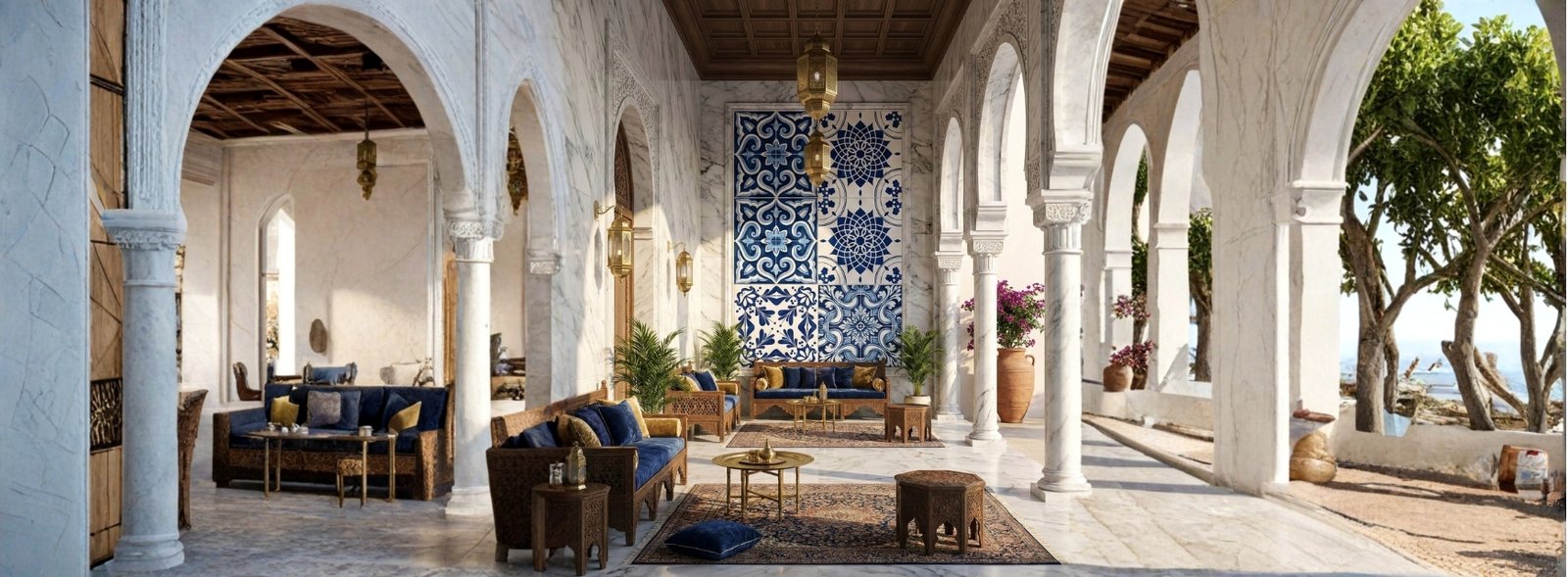
Glass is no longer just a transparent barrier; it’s a high-definition, tactile medium where industrial precision meets luxury craftsmanship. You’ve likely experienced the frustration of low-resolution results or ink that peels and scratches off non-porous surfaces far too easily. Across the United Arab Emirates, where the construction sector is experiencing rapid expansion and ambitious projects are consistently approved, the demand for durable, sophisticated architectural finishes keeps climbing. You need a solution that doesn’t rely on temporary stickers or lamination to achieve a professional result.
This guide demonstrates how advanced UV-LED technology turns glass into a high-fidelity printed surface for your most ambitious UAE projects. By combining high-resolution printing with specialised white ink effects, you can achieve the vibrant, tactile results your commercial or luxury applications require. We’ll explore the technical precision of UV printing on glass Dubai, the science of long-term durability on tempered surfaces, and how to select a partner capable of executing complex industrial designs for the 2026 market.
Key Takeaways
- Understand the science of instant UV-LED curing and how it enables direct-to-surface digital printing on non-porous glass without the risk of ink spreading.
- Learn how to achieve photorealistic results for UV printing on glass Dubai through high-resolution print heads and strategic white ink layering.
- Identify high-impact applications for printed glass in the UAE market, ranging from sophisticated architectural partitions to bespoke retail displays.
- Discover the professional pre-treatment techniques and primers that support long-term durability and scratch resistance on tempered surfaces.
- Gain insights into the collaborative production process that allows for the execution of complex, large-scale industrial and luxury projects.
Defining UV Printing on Glass in Dubai: What the Process Involves
Dubai’s architectural landscape demands materials that withstand extreme conditions while maintaining aesthetic perfection. Direct UV printing on glass is one of the routes used to achieve this balance, and its suitability depends on the glass and the application. It’s a direct-to-surface digital process that utilizes ultraviolet light to instantly bond ink to the glass substrate. This method bypasses the limitations of traditional printing, allowing for high-definition imagery on one of the world’s most challenging, non-porous surfaces. It’s precise. The cured film is hard-wearing, and how long it lasts depends on the glass, the primer, the cure and where the panel lives. It’s the technology driving the visual identity of the city’s newest landmarks.
The core of this technology lies in photopolymerization. As the print head moves across the glass, LED lamps follow immediately, emitting specific wavelengths of ultraviolet light. This light triggers a chemical reaction in the ink, turning it into a durable, solid film in milliseconds. Curing is the transition of the ink from a liquid state to a solid film. Because LED lamps operate at significantly lower temperatures than traditional mercury bulbs, they protect sensitive glass treatments and coatings from heat-induced stress. This cool, controlled process ensures the glass remains structurally sound while receiving a vibrant, high-fidelity finish.
For decades, designers relied on vinyl stickers or screen printing to add graphics to glass. Vinyl often fails in the intense humidity and heat of the Emirates, leading to unsightly bubbling or peeling over time. Screen printing, while durable, requires high setup costs and physical stencils that make bespoke, low-volume luxury runs prohibitively expensive. Digital UV printing removes these barriers entirely. It can achieve strong adhesion when the glass is correctly cleaned and primed, using UV-curable inks selected for scratch and light resistance.
The environmental profile of this technology also aligns with the UAE’s commitment to net-zero carbon emissions by 2050. These are UV-curable inks: they cure under UV light rather than by a carrier solvent evaporating away, so solvent emissions during printing are substantially lower than with solvent-based printing. That is not the same as zero emissions, and what any particular ink contains is set out in its own safety data sheet. For commercial projects in Dubai’s growing smart building sector, this sustainable approach isn’t just a preference; it’s a requirement. You get a product that’s both visually striking and ecologically responsible, without the fragility associated with traditional lamination. UV printing on glass Dubai provides a level of detail and longevity that stickers simply cannot match.
The Technical Edge: UV-LED Technology and High-Resolution Fidelity
Achieving photorealistic fidelity on a transparent substrate requires more than just standard equipment. High-resolution print heads place every micro-droplet of ink precisely. This accuracy is paramount when executing complex UV printing on glass Dubai projects, where the interplay of light and transparency leaves no room for error. We utilize premium Marabu inks, known for their expansive color gamut and chemical resistance, to support adhesion between the ink and the glass, which is verified by testing on the actual panel. These inks are specifically engineered to handle the thermal expansion of glass in the UAE’s climate, preventing the cracking or delamination common with inferior products.
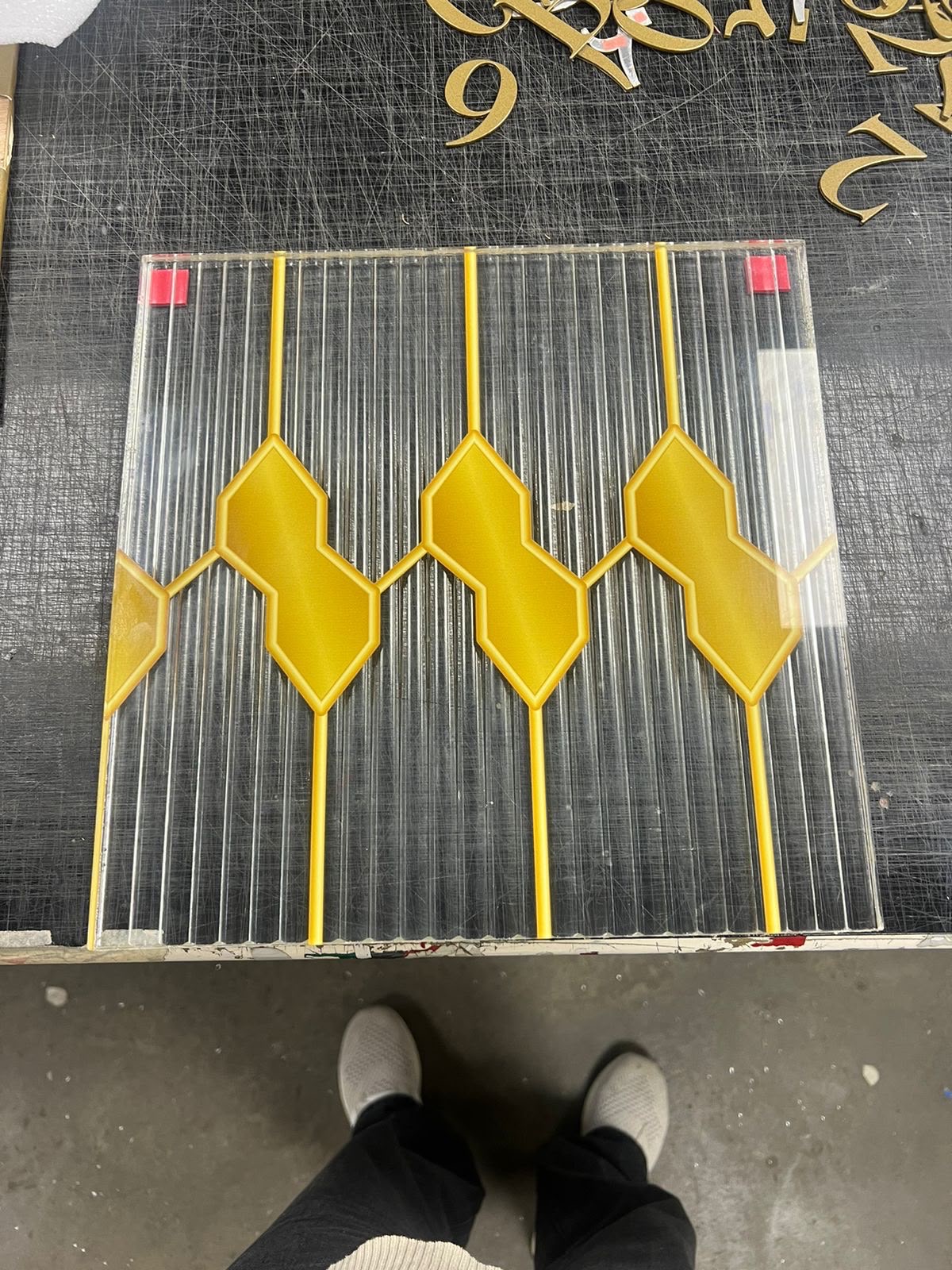
The global market is currently witnessing a massive shift toward innovative technology that integrates 3D effects with standard UV processes, allowing for a level of detail previously reserved for high-end digital displays.
White ink isn’t just a color; it’s a structural necessity for glass. On clear or tinted substrates, standard CMYK inks are naturally translucent. By applying a dense white ink layer first, we give the colours an opaque base so they read as boldly as they would on a white wall. The white is there for opacity, not adhesion — adhesion is the primer’s job, and the primer goes down before any ink. This capability also enables selective opacity. You can design a single pane of glass that features fully opaque logos alongside semi-transparent gradients. This technique is ideal for creating sophisticated ‘sandblast’ or ‘frosted’ effects without the mess of traditional acid etching. It allows for a level of privacy control that’s both functional and artistically flexible.
Modern UV-LED systems allow for ‘Raised Texture’ or 2.5D printing. By layering ink multiple times in exact registration, we build physical height on the glass surface. This tactile dimension adds a luxury feel to branding and allows for the production of ADA-compliant signage and Braille directly on architectural glass. It’s a significant advancement for commercial buildings in Dubai that must meet strict accessibility standards. The finish can be further refined with spot-varnish effects, alternating between deep matte and high-gloss textures to guide the eye. If you’re looking to conceptualize a project with these unique tactile elements, visiting a specialized innovation showroom can help you visualize the physical depth possible with modern machinery.
Architectural and Commercial Applications Across the Emirates
The UAE’s architectural landscape is evolving toward more transparent, light-filled environments, as interiors move toward more transparent, light-filled environments. In this context, UV printing on glass Dubai is no longer just an aesthetic choice; it’s a structural branding tool. Developers utilize printed facades and internal partitions to define spaces without sacrificing the open-plan feel required in modern skyscrapers. Demand for customised, durable glass finishes in residential and commercial towers has grown with that pipeline.
Retail and hospitality sectors leverage this technology to create immersive brand experiences. High-traffic destinations like Dubai Mall or the various luxury resorts along the coast use high-impact storefronts and bespoke product displays to capture attention. In hospitality, the application extends to custom-printed mirrors, back-painted glass for sleek lobby finishes, and decorative room dividers that maintain privacy while allowing light to permeate. Premium furniture manufacturers also integrate these prints into cabinetry and tabletop designs, offering a level of customization that traditional materials don’t match.
Residential interiors are seeing a significant shift toward personalized glass elements. Designers frequently transform standard glass doors and windows into artistic focal points using UV printing on glass Dubai. Kitchen splashbacks and bathroom panels are particularly popular, as the cured ink resists the heat and moisture common in these areas. There’s a strong national trend toward integrating cultural motifs, such as intricate Arabic calligraphy or geometric patterns, into modern glass designs. This allows homeowners to blend traditional UAE heritage with contemporary architectural styles seamlessly.
Office lobby branding requires a balance of professionalism and durability. UV-printed glass is a durable option for corporate logos and directional signage, and indoors, out of direct sun, a correctly primed and fully cured print holds its colour and its adhesion well. The precision of the technology also makes it the preferred choice for high-end glass awards and trophies, where intricate logo details must be rendered perfectly. For large-scale national infrastructure projects, such as metro stations or public pavilions, the scalability of digital printing ensures that massive glass installations maintain visual consistency across every pane. It’s an efficient, high-fidelity solution for the UAE’s most ambitious commercial developments.
Durability and Maintenance: Ensuring Longevity on Non-Porous Surfaces
The most common inquiry regarding UV printing on glass Dubai centers on the physical integrity of the finish. Clients often worry that the ink will eventually scratch, peel, or delaminate from the smooth surface of the glass. This skepticism is understandable given the limitations of older vinyl applications or standard digital methods. However, the longevity of a modern UV-printed installation depends entirely on the chemical relationship between the ink and the substrate. Executed properly, the ink is not simply resting on the glass: the primer chemically couples the cured film to the surface. It remains a coating on the glass rather than a layer fused into it.
What makes that bond hold is a rigorous pre-treatment process. We apply specialized chemical primers that act as a microscopic bridge, creating a molecular bond between the inorganic glass surface and the organic ink. By utilizing high-performance Marabu inks, the print remains stable even when subjected to the dramatic temperature fluctuations and high humidity levels characteristic of the UAE. Proper pre-treatment improves scratch resistance. This level of preparation is what separates a temporary decorative piece from a long-term architectural solution that maintains its integrity for years.
Maintaining the visual fidelity of your glass prints is straightforward if you follow established professional protocols. While the cured ink is remarkably tough, we recommend using soft, non-abrasive cloths and mild, pH-neutral cleaners to preserve the surface finish. Avoid harsh solvents or abrasive scrubbing pads that could compromise the ink’s texture over time. Because the inks used in UV printing on glass Dubai are inherently UV-resistant, they hold colour well under the intense Arabian sun, though lightfastness is finite and depends on the ink, the cure and the exposure. That suits internal lobby partitions and protected glazing. Fully exposed facades are a different question: organic UV ink is a surface coating with a finite lightfast life, which is why the National Glass Association rates it for interior use and why fired ceramic frit — glass powder and inorganic pigment fused into the panel at tempering temperature, covered by ASTM C1048 Condition B — is what is normally specified for facade and spandrel work. The two are not equivalent, and we will say which one a job needs.
A fully cured UV-LED print holds up well in a high-traffic retail environment or a residential bathroom. How long it holds its colour depends on the ink, the cure, the cleaning it gets and how much direct sun reaches it. If you’re planning a project that requires this level of technical resilience and aesthetic perfection, you can consult with our glass printing specialists to determine the ideal pre-treatment for your specific glass type.
Direct-to-Surface Printing at Sun Studio Dubai
Sun Studio Dubai operates as the specialized direct-to-surface division of PRO TECHnology, a name synonymous with IT and imaging solutions in the UAE since 1998. This quarter-century of heritage provides a foundation of technical reliability that’s rare in the specialized field of UV printing on glass Dubai. We don’t just offer a service; we provide a partnership where industrial-grade technology meets bespoke creative vision. This dual identity as both a high-end production house and a primary equipment supplier allows us to bridge the gap between conceptual design and physical reality for national brands and industrial partners across the Emirates.
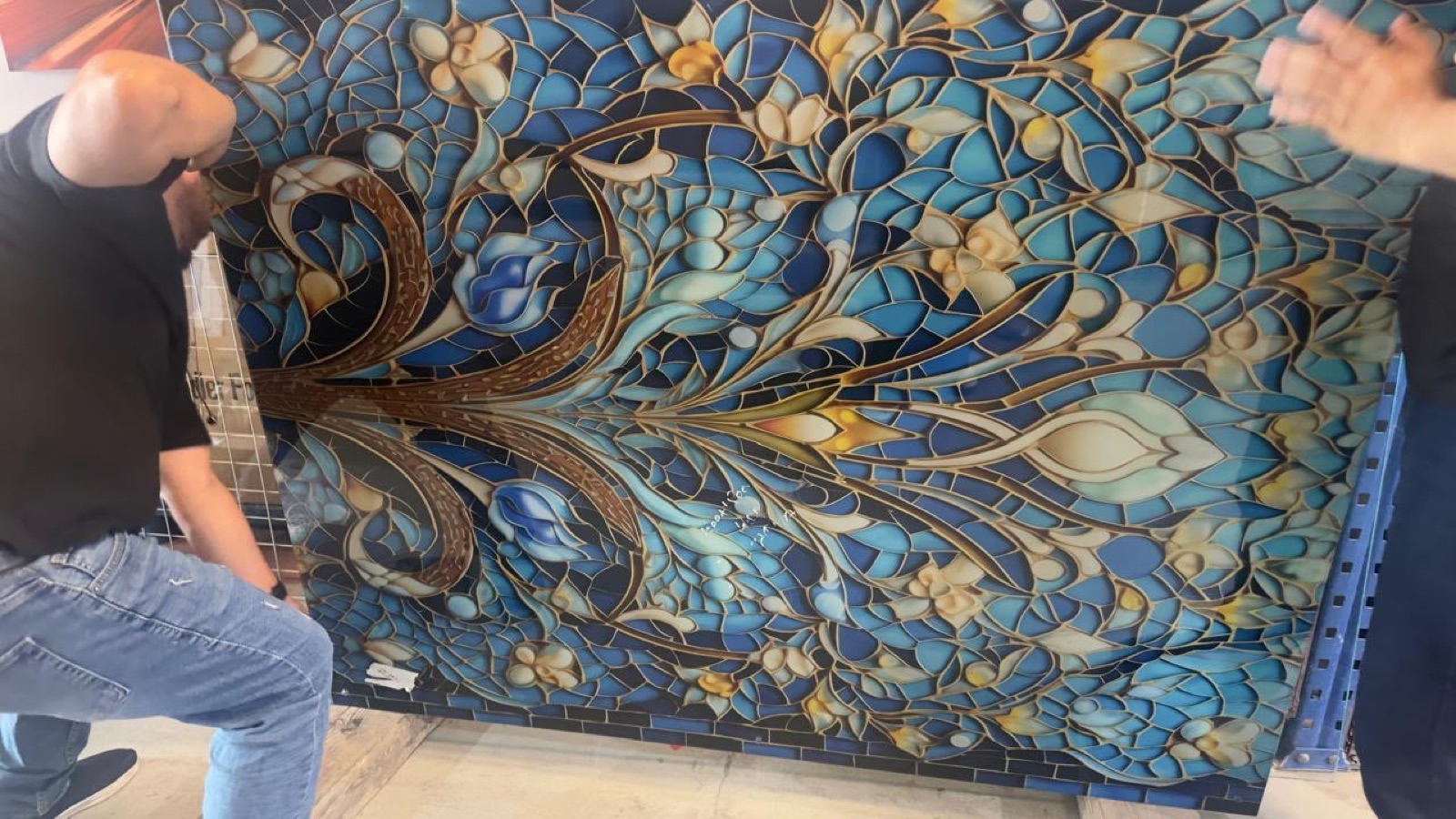
Our facility is unique because it functions as both a high-volume production center and a live innovation showroom. You can see the wallPen, LSINC and DCS systems in operation before committing to a large-scale project. This transparency is vital for complex UV printing on glass Dubai assignments where precision is non-negotiable. Our consultation process guides you from the initial creative spark through to the technical nuances of file preparation and surface pre-treatment. Expert technicians at Sun Studio Dubai are on hand to provide industrial printing consultancy, ensuring that your specific substrate receives the optimal treatment for long-term adhesion.
Reliability in the Gulf’s climate requires the best materials. Sun Studio Dubai prints with Marabu UV-curable inks. Marabu itself states that preliminary trials are essential to determine suitability for an intended use, so adhesion is confirmed by testing on your actual glass rather than assumed from the ink. Our facility is equipped to handle everything from high-volume flatbed glass panels for office facades to intricate cylindrical printing for the luxury cosmetics sector. That range means a designer can keep flat panel work and object printing with one supplier. We invite you to conceptualise your next glass project with Sun Studio Dubai and experience the intersection of master craftsmanship and current digital technology.
Advancing Your Architectural Vision with Precision Printing
The evolution of glass from a simple building material to a high-definition canvas is now a reality for the UAE’s most ambitious designers. The integration of UV-LED curing and specialized white ink layering overcomes the historical challenges of adhesion and clarity on non-porous surfaces. By prioritizing industrial pre-treatment and utilizing high-performance inks, your projects achieve a level of durability that withstands the unique environmental demands of the Emirates without the risk of peeling or fading.
Selecting a partner with the right heritage is essential for success. As a specialized division of the PRO TECHnology Group, Sun Studio Dubai offers the technical authority and official partnerships with brands like LSINC so the execution can be checked before a full run. You don’t have to guess the results. Our live industrial showroom allows you to witness the technology in action before production begins. Ready to transform your next commercial or luxury space? Request a Technical Consultation for Your Glass Project and discover the possibilities of UV printing on glass Dubai. We look forward to helping you realize your creative vision with a high level of precision.
Common questions
ملخص بالعربية
طباعة UV على الزجاج في دبي: الدليل الشامل لعام 2026
الطباعة العكسية، والحبر الأبيض، وتأثيرات الصنفرة والتغليف: قائمة المواصفات الكاملة للزجاج المعماري. لم يعد الزجاج مجرد حاجز شفاف، بل تحوّل إلى وسيط عالي الدقة وملموس الملمس تلتقي فيه الدقة الصناعية بحرفية المنتجات الفاخرة.
اقرأ المقال كاملاً بالعربية ←